Scaling

I am a Tech Enthusiast having 13+ years of experience in 𝐈𝐓 as a 𝐂𝐨𝐧𝐬𝐮𝐥𝐭𝐚𝐧𝐭, 𝐂𝐨𝐫𝐩𝐨𝐫𝐚𝐭𝐞 𝐓𝐫𝐚𝐢𝐧𝐞𝐫, 𝐌𝐞𝐧𝐭𝐨𝐫, with 12+ years in training and mentoring in 𝐒𝐨𝐟𝐭𝐰𝐚𝐫𝐞 𝐄𝐧𝐠𝐢𝐧𝐞𝐞𝐫𝐢𝐧𝐠, 𝐃𝐚𝐭𝐚 𝐄𝐧𝐠𝐢𝐧𝐞𝐞𝐫𝐢𝐧𝐠, 𝐓𝐞𝐬𝐭 𝐀𝐮𝐭𝐨𝐦𝐚𝐭𝐢𝐨𝐧 𝐚𝐧𝐝 𝐃𝐚𝐭𝐚 𝐒𝐜𝐢𝐞𝐧𝐜𝐞. I have 𝒕𝒓𝒂𝒊𝒏𝒆𝒅 𝒎𝒐𝒓𝒆 𝒕𝒉𝒂𝒏 10,000+ 𝑰𝑻 𝑷𝒓𝒐𝒇𝒆𝒔𝒔𝒊𝒐𝒏𝒂𝒍𝒔 and 𝒄𝒐𝒏𝒅𝒖𝒄𝒕𝒆𝒅 𝒎𝒐𝒓𝒆 𝒕𝒉𝒂𝒏 500+ 𝒕𝒓𝒂𝒊𝒏𝒊𝒏𝒈 𝒔𝒆𝒔𝒔𝒊𝒐𝒏𝒔 in the areas of 𝐒𝐨𝐟𝐭𝐰𝐚𝐫𝐞 𝐃𝐞𝐯𝐞𝐥𝐨𝐩𝐦𝐞𝐧𝐭, 𝐃𝐚𝐭𝐚 𝐄𝐧𝐠𝐢𝐧𝐞𝐞𝐫𝐢𝐧𝐠, 𝐂𝐥𝐨𝐮𝐝, 𝐃𝐚𝐭𝐚 𝐀𝐧𝐚𝐥𝐲𝐬𝐢𝐬, 𝐃𝐚𝐭𝐚 𝐕𝐢𝐬𝐮𝐚𝐥𝐢𝐳𝐚𝐭𝐢𝐨𝐧𝐬, 𝐀𝐫𝐭𝐢𝐟𝐢𝐜𝐢𝐚𝐥 𝐈𝐧𝐭𝐞𝐥𝐥𝐢𝐠𝐞𝐧𝐜𝐞 𝐚𝐧𝐝 𝐌𝐚𝐜𝐡𝐢𝐧𝐞 𝐋𝐞𝐚𝐫𝐧𝐢𝐧𝐠. I am interested in 𝐰𝐫𝐢𝐭𝐢𝐧𝐠 𝐛𝐥𝐨𝐠𝐬, 𝐬𝐡𝐚𝐫𝐢𝐧𝐠 𝐭𝐞𝐜𝐡𝐧𝐢𝐜𝐚𝐥 𝐤𝐧𝐨𝐰𝐥𝐞𝐝𝐠𝐞, 𝐬𝐨𝐥𝐯𝐢𝐧𝐠 𝐭𝐞𝐜𝐡𝐧𝐢𝐜𝐚𝐥 𝐢𝐬𝐬𝐮𝐞𝐬, 𝐫𝐞𝐚𝐝𝐢𝐧𝐠 𝐚𝐧𝐝 𝐥𝐞𝐚𝐫𝐧𝐢𝐧𝐠 new subjects.
When thinking about system design one of the important points that comes into our mind is Scaling. Basically what is scaling?
Imagine a scenario where you have built a product and you got some customers as well. Everything was going well until you got a spike in the number of users and they expect a flawless, perfect application. If you are not prepared for this, the application performance will start degrading, and eventually, you will lose your audience and business. This is a critical problem for you and you want to solve it asap, otherwise, your product will become dead. How do you solve this problem?
The scaling of your system is based on several factors more specifically based on the behavior of traffic.
If the traffic is increasing gradually(linear growth) or if there is a sudden spike(exponential growth), or if the traffic is only increasing at a specific time, etc.
In software engineering, scaling simply means making a system capable of serving more users.
We can scale our system in two ways, we can either increase the processing power/size of the resources(like CPU, memory, etc) by purchasing a bigger machine or we can add more resources and use them in parallel. The former is called vertical scaling and the latter is called Horizontal scaling.
Vertical Scaling

In vertical scaling, we add more power(CPU, RAM, and DISK) to the existing server(buy a bigger machine). vertical scaling is very easy to achieve, the only thing to do is upgrade our server to have more processing power or memory or both. For example, if you are using an AWS EC2 instance just upgrade it to the next level.
The advantage is since we have only one machine to manage don’t need any complex design or architecture here. But there is a limit to vertical scaling, we can’t increase the power of a server beyond a limit, also this will become a single point of failure.
Horizontal Scaling
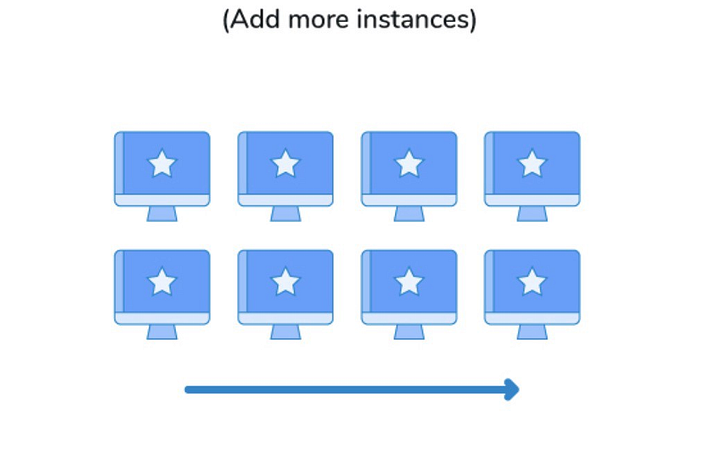
In horizontal scaling, we scale by adding more servers to the system(buying more and more machines) and dividing the load among them. Here the power of individual servers won’t be high but all these servers collectively improve the system throughput.
Unlike vertical scaling, there is no limit to horizontal scaling since we can have as many as servers we want and distribute the load among them. But the drawback of this is we need complex design and architecture to work the different machines together and share the traffic between these resources efficiently.
Do you want to connect with me I have started mentoring others for career and interviews at 𝐭𝐨𝐩𝐦𝐚𝐭𝐞.𝐢𝐨/𝐧𝐚𝐯𝐞𝐞𝐧𝐩𝐧


